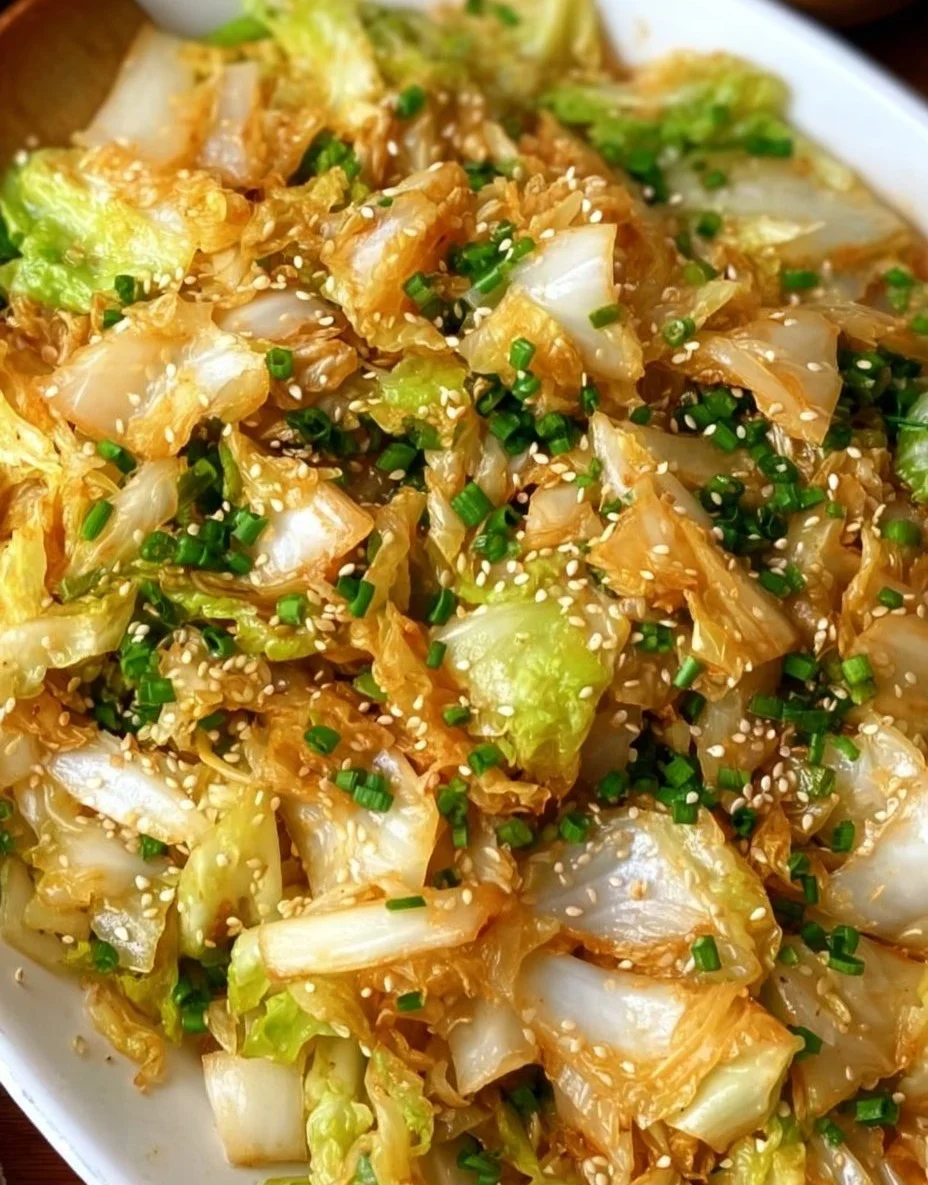
Sweet and tender, sautéed Napa cabbage envelops your palate in a symphony of flavors that effortlessly dance with each bite. The first moment you sink your teeth into this emerald-green delight, you experience a gentle crunch. The delicate leaves, slightly crisp yet sublimely soft, yield under pressure, awakening your senses with an aromatic embrace that fills your kitchen. As the garlic sizzles and caramelizes in the skillet, it creates an inviting aroma that beckons not just your taste buds but everyone nearby, their curiosity piqued by the savory allure.
Imagine the moment when the harmonizing notes of soy sauce mingle with the cabbage, each strand glistening under the warm heat. The first forkful bursts with nutty undertones from the sautéed garlic, while the soy sauce lends a subtle umami punch that makes the entire dish utterly irresistible. This is more than a side dish; it’s a vibrant celebration of simple ingredients that come together to create a dish that feels comforting yet exciting. Not only does sautéed Napa cabbage make your table look inviting, but it also adds nutrition and a refreshing crunch, turning any meal into a wholesome experience.
Why You’ll Love This Sautéed Napa Cabbage
Sautéed Napa cabbage stands out not just for its tantalizing flavor profile but also for the myriad of benefits it brings to your dining table. This dish is remarkably versatile; it transitions seamlessly from a side dish for a cozy weeknight dinner to a vibrant complement for a festive feast. The benefits extend beyond mere taste—Napa cabbage is rich in vitamins K and C and a source of antioxidants, making this dish as healthy as it is delicious.
Picture serving this beautiful creation at your next gathering. Imagine your friends lifting their forks with intrigue, their eyes widening as they savor the first bite. They’ll relish the tender folds of cabbage, each mouthful a delight, coaxing laughter and conversation around the table. This sautéed wonder speaks of simplicity and sophistication, a dish that underscores quality over quantity. With just a few ingredients, it showcases the beauty of fresh produce, ensuring everyone leaves satisfied and with full hearts.
Preparation Phase & Tools to Use
To craft this delectable sautéed Napa cabbage, you don’t need an arsenal of elaborate kitchen tools. A few essentials will suffice, each playing a crucial role in the creation of your culinary masterpiece.
- Large Skillet: Choose a wide, heavy-bottomed skillet that allows for even cooking and plenty of space for the cabbage to sauté without crowding.
- Sharp Knife and Cutting Board: A sharp knife makes slicing through the cabbage effortless, maintaining the integrity of its delicate leaves.
- Spatula: A sturdy spatula helps to toss the cabbage gently, ensuring every piece receives a kiss of garlic and soy sauce without falling apart.
Before you jump into the cooking process, prep your ingredients and arrange your cooking station. Wash the cabbage thoroughly to remove any grit, and have your garlic minced and ready to go. A little bit of organization will not only save you time but also keep cooking enjoyable.
Ingredients for Sautéed Napa Cabbage
- 1 head Napa cabbage: This unique variety of cabbage is known for its tender leaves and sweet flavor. If you can’t find Napa, savoy cabbage can work as a substitute.
- 2 tablespoons vegetable oil: Any neutral oil works well, but you could experiment with sesame oil for an extra layer of richness.
- 2 cloves garlic, minced: Fresh garlic infuses the dish with its fragrant warmth. Freshly minced captures the essence better, but garlic powder can also suffice in a pinch.
- 1 tablespoon soy sauce: This adds a savory depth. Tamari or coconut aminos can be used for a gluten-free alternative.
- Salt and pepper to taste: These enhance and elevate the natural flavors of the vegetables.
- Sesame seeds (optional) for garnish: Their nutty crunch adds an appealing contrast and visual interest.
How to Make Sautéed Napa Cabbage
- Begin by cutting the Napa cabbage into quarters and removing the core. Slice the quarters into thin strips, should you prefer. This ensures even cooking and a delightful texture.
- Heat the vegetable oil in a large skillet over medium heat. Use enough oil to coat the pan, allowing for proper sautéing.
- Add the minced garlic once the oil shimmers. Sauté for about 30 seconds until the garlic releases its fragrant aroma, but be careful not to let it burn.
- Incorporate the cabbage strips into the skillet, tossing them gently. Stir-fry for about 5–7 minutes until the cabbage wilts and becomes tender, yet still retains a slight crunch.
- Drizzle the soy sauce over the sautéed cabbage, confirming every strand gets coated. Season with salt and pepper to taste, allowing the flavors to meld together.
- Cook for an additional minute, then promptly remove from heat to avoid overcooking the cabbage.
- Serve hot, garnished with sesame seeds for an elegant finish.
Chef’s Notes & Helpful Tips
- Make-ahead tips: You can slice the cabbage early and store it in an airtight container in the fridge. Just be sure to sauté it right before serving for the best texture.
- Cooking alternatives: If you prefer a different method, try air-frying the cabbage for about 10–12 minutes at 375°F for a crispy twist, or roast it in the oven at 400°F for about 25 minutes, tossing it halfway through.
- Customization ideas: Feel free to add a splash of rice vinegar for brightness, or toss in some red pepper flakes for a hint of heat. For a heartier dish, upgrade your sautéed cabbage by adding chopped carrots, bell peppers, or even mushrooms.
Common Mistakes to Avoid
While sautéing Napa cabbage may seem simple, a few common pitfalls can dampen your culinary creation.
- Overcooking the cabbage: Avoid turning the cabbage mushy by stirring frequently and keeping an eye on it. Remember, slight crunch enhances the dish.
- Not preheating the skillet: Ensure your skillet is hot enough before adding oil and garlic. A cold pan can lead to soggy vegetables instead of beautifully sautéed cabbage.
- Skipping the garlic: Garlic doesn’t just add flavor; it elevates the entire dish. Don’t skip or substitute it unless absolutely necessary.
What to Serve With Sautéed Napa Cabbage
This sautéed Napa cabbage shines beside a variety of main courses that let its vibrant flavor stand out. Consider pairing it with:
- Grilled chicken: The savory, juicy profile of grilled chicken balances perfectly with the crispness of the cabbage.
- Stir-fried tofu: This vegetarian option adds protein while allowing the cabbage’s natural sweetness to shine.
- Pan-seared salmon: The rich, buttery flavor of salmon harmonizes with the subtle and crisp cabbage.
- Asian-style dumplings: Their savory filling pairs beautifully with the light crunch of sautéed Napa cabbage.
- Rice bowls: Create a nourishing bowl with grains topped with sautéed cabbage, your choice of protein, and a drizzle of soy sauce or spicy mayo.
- Pork chops: Their hearty flavor complements the crunch of the cabbage, offering a delightful texture contrast.
- Egg fried rice: The rich, salty flavors of fried rice provide a comforting backdrop to the freshness of the cabbage.
Storage & Reheating Instructions
Leftovers of sautéed Napa cabbage can be stored effortlessly.
- Fridge: Place any remaining sautéed cabbage in an airtight container and refrigerate for up to 3 days. It may lose some crunch, but the flavor remains intact.
- Freezer: For long-term storage, you can freeze it, though the texture might soften more upon thawing. Freeze in a freezer-safe container for up to 2 months.
- Reheating methods: Reheat on the stovetop over medium-low heat, adding a splash of water or soy sauce to restore moisture. Alternatively, reheat in the microwave for 1–2 minutes, stirring halfway through.
Estimated Nutrition Information
This vibrant dish offers approximate values per serving:
- Calories: 120
- Protein: 3g
- Fat: 9g
- Carbohydrates: 10g
- Fiber: 4g
Please note that nutritional values vary based on the specific ingredients used and portion sizes.
FAQs
Q1: Can I use other types of cabbage for this recipe?
Absolutely! While Napa cabbage provides a unique flavor and texture, savoy or green cabbage can substitute. Expect slight variations in flavor and crunch.
Q2: Is sautéed Napa cabbage safe for those with gluten sensitivities?
Yes, as long as you use gluten-free soy sauce, such as tamari or coconut aminos, this dish remains safe.
Q3: How can I make this dish vegetarian-friendly?
This dish is inherently vegetarian! Pairing it with protein alternatives like tofu or chickpeas creates a well-rounded meal.
Q4: Can I double the recipe?
Certainly! Simply ensure your skillet is large enough or sauté in batches to maintain the integrity and texture of the cabbage.
Q5: What are some other ways to incorporate Napa cabbage into my meals?
Napa cabbage works wonders in salads, stir-fries, or even as a filling for dumplings. Its versatility invites creativity in your kitchen.
Conclusion
The luscious sautéed Napa cabbage invites comfort and joy into your meals, transforming everyday ingredients into something exceptional. You can relish the effortless combination of flavors and textures, nourishing not only the body but also the soul. As you prepare this dish, imagine the warmth of shared moments around the table, laughter, and love filling the air like the delightful aroma escaping from your kitchen. Dive into this recipe, and revel in the vibrant crunch and umami goodness—your taste buds will thank you!
Print
Sautéed Napa Cabbage
- Prep Time: 10 minutes
- Cook Time: 10 minutes
- Total Time: 20 minutes
- Yield: 4 servings 1x
- Category: Side Dish
- Method: Sautéing
- Cuisine: Asian
- Diet: Vegan
Description
A vibrant celebration of tender sautéed Napa cabbage, infused with garlic and soy sauce for a delightful side dish.
Ingredients
- 1 head Napa cabbage
- 2 tablespoons vegetable oil
- 2 cloves garlic, minced
- 1 tablespoon soy sauce
- Salt and pepper to taste
- Sesame seeds (optional) for garnish
Instructions
- Begin by cutting the Napa cabbage into quarters and removing the core. Slice the quarters into thin strips.
- Heat the vegetable oil in a large skillet over medium heat.
- Add the minced garlic once the oil shimmers, and sauté for about 30 seconds.
- Incorporate the cabbage strips into the skillet, tossing gently, and stir-fry for about 5–7 minutes.
- Drizzle the soy sauce over the sautéed cabbage and season with salt and pepper to taste.
- Cook for an additional minute, then remove from heat.
- Serve hot, garnished with sesame seeds if desired.
Notes
For added brightness, consider a splash of rice vinegar or red pepper flakes for heat. Avoid overcooking to maintain a slight crunch.
Nutrition
- Serving Size: 1 serving
- Calories: 120
- Sugar: 3g
- Sodium: 300mg
- Fat: 9g
- Saturated Fat: 1g
- Unsaturated Fat: 6g
- Trans Fat: 0g
- Carbohydrates: 10g
- Fiber: 4g
- Protein: 3g
- Cholesterol: 0mg