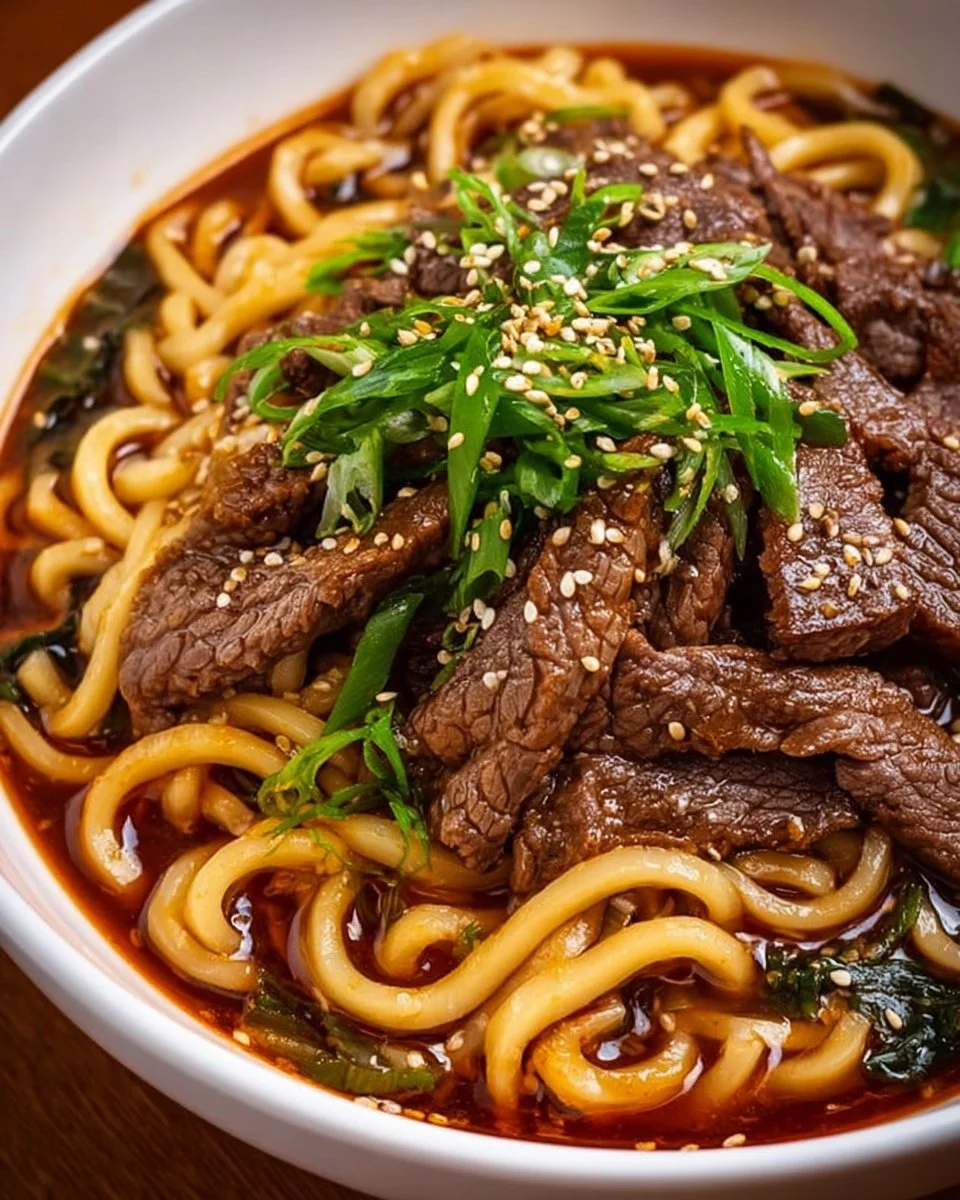
In the world of culinary delights, few meals possess the magical ability to transport your taste buds and warm your soul quite like a hearty bowl of Korean Beef Noodles. Imagine sinking your teeth into tender strips of marinated flank steak, each bite bursting with intense flavor that dances on your palate, harmoniously mingling with the silky strands of udon noodles. The glossy, vibrant sauces envelop every ingredient, creating a symphony of taste and aroma that’s simply irresistible.
As you sit down to enjoy this dish, the tantalizing aroma of garlic and ginger wafts through the air, tinging your surroundings with hints of umami that build an insatiable anticipation. The moment you plunge your chopsticks into this vibrant dish, you feel the satisfying texture of the chewy udon complementing the savory beef. Each mouthful delivers a delightful balance of sweet, spicy, and savory notes, while a sprinkle of green onions and sesame seeds adds an irresistible crunch and freshness. It’s a warm embrace of Korean comfort food, ideal for cozy dinners or joyful celebrations.
Why You’ll Love This Korean Beef Noodles
This dish isn’t just a meal; it’s an experience. Korean Beef Noodles brings a delightful fusion of flavors that captivates the senses, making it an effortless choice for weeknight dinners or festive gatherings. The beautiful marriage of tender beef and thick, chewy noodles coated in a rich sauce offers both indulgence and satisfaction. Imagine those cozy evenings when the rain taps gently against your window, and you find solace in a beautifully constructed bowl of noodles that warms your heart and lifts your spirits.
Its versatility shines through, making Korean Beef Noodles a star in your culinary repertoire. Perfect for entertaining friends or enjoying a quiet night in, this dish suits any occasion. Plus, the quick cooking time means that you can whip it up in no time, impressing yourself and your loved ones alike. You’ll love how it stands out with its vibrant flavors and textures, creating a comforting dish that feeds not just the body, but the soul.
Preparation Phase & Tools to Use
To create this culinary masterpiece, gathering the right tools makes all the difference. A sharp chef’s knife becomes your ally as you thinly slice the flank steak against the grain, ensuring each piece remains tender and juicy. A cutting board provides a stable base as you prep — it’s essential for safely chopping your ingredients.
You’ll also need a large skillet, preferably a non-stick one, to achieve that perfect sear on your beef. It allows for easy handling and prevents lovely caramelized bits from sticking, enhancing the flavor further. Don’t forget a mixing bowl for marinating the beef—this step is crucial for infusing every ounce of flavor into your protein.
For preparation tips, always remember to let your beef marinate for at least 30 minutes. This allows the flavors to penetrate deeply, giving your dish that signature richness. Cook the udon noodles a couple of minutes short of the package instructions, as the final tossing with the beef will finish cooking them while absorbing the gorgeous sauce.
Ingredients for Korean Beef Noodles
- Beef: 1 pound of flank steak, thinly sliced against the grain. This cut is ideal for its tenderness and flavor.
- Noodles: 8 ounces of fresh udon noodles, contributing a chewy and hearty texture.
- Sauce:Soy Sauce: 1/4 cup enhances umami.
- Gochujang (Korean chili paste): 2 tablespoons add both heat and a complex sweetness.
- Sesame Oil: 2 tablespoons provide a nutty aroma and rich flavor.
- Sugar: 1 tablespoon balances the spice.
- Garlic: 2 cloves, minced, imparting a fragrant kick.
- Ginger: 1 teaspoon, grated, adding warmth and zest.
- Garnish:Green Onions: 2, chopped, for freshness.
- Sesame Seeds: 1 tablespoon, crisp texture for the final touch.
If flank steak is not available, you can substitute with sirloin or ribeye. For noodles, feel free to use rice noodles for a gluten-free version. The vibrant flavors do not waver even with alternatives—what matters is maintaining that delightful balance!
How to Make Korean Beef Noodles
- In a mixing bowl, combine soy sauce, gochujang, sesame oil, sugar, garlic, and ginger. Stir well until the sugar dissolves, creating a flavorful marinade.
- Add the thinly sliced beef to the marinade, ensuring each piece gets coated. Let it sit for at least 30 minutes, allowing the flavors to meld beautifully.
- While the beef marinates, prepare the udon noodles according to package instructions. Drain and set aside when done, but don’t forget to reserve a cup of the cooking water in case you need to adjust the sauce consistency later.
- Heat a tablespoon of oil in a large skillet over medium-high heat. Add the marinated beef and sauté for 5-7 minutes until browned and cooked through. The sizzling sound will have your mouth watering and heart racing!
- Gently toss the cooked udon noodles into the skillet with the beef, stirring to combine the flavors. If the sauce seems too thick, add a splash of the reserved noodle cooking water for a silky finish. Cook for an additional 2-3 minutes until everything is heated through.
- Remove from heat, garnish with chopped green onions and sesame seeds, and serve hot. The vibrant colors and tantalizing aroma will beckon you to dive in.
Chef’s Notes & Helpful Tips
To elevate your Korean Beef Noodles even further, consider these helpful tips:
- Make Ahead: Marinate the beef a day in advance to enhance the flavor infusion. Retreat it in the refrigerator for up to 24 hours for maximum tenderness.
- Cook Alternatives: Craving a different way to cook? Use an air fryer to cook the beef for a healthier option, or roast it in the oven at 400°F until done for a cozy twist.
- Customize: Feel free to add vegetables like bell peppers, zucchini, or bok choy for a nutritious boost. Just toss them in the skillet along with the beef for a one-pan wonder!
Common Mistakes to Avoid
Crafting Korean Beef Noodles is a joyful experience, but there are pitfalls to watch for:
- Skipping the Marinade: Don’t rush this step. Allowing the beef to soak in that rich mixture is essential for flavor.
- Overcooking Noodles: Cook the udon just until tender, as you’ll toss them with hot beef and sauce, which continues the cooking process.
- Not Adjusting Sauce: If the sauce is too thick, fear not! Adding a little pasta water will achieve the desired consistency.
What to Serve With Korean Beef Noodles
Pair these glorious noodles with a variety of sides to create a full dining experience:
- Kimchi: The traditional fermented vegetable dish compliments the flavors with a spicy tang.
- Korean Pancakes (Pajeon): These crispy delights add texture and a savory contrast.
- Steamed Broccoli: Its mild flavor acts as a refreshing counterbalance to the richness of the noodles.
- Miso Soup: A light broth provides a cleanse between mouthfuls of bold flavors.
- Spinach Salad: Tossed with sesame seeds and a light dressing, this adds a fresh and crunchy element to your meal.
- Roasted Sweet Potatoes: Their natural sweetness pairs wonderfully with the savory notes of the beef.
Storage & Reheating Instructions
Leftovers can be a blessing! Store your Korean Beef Noodles in an airtight container in the fridge for up to three days. If you need to save them longer, freeze in a suitable container for up to three months.
When it’s time to enjoy again, gently reheat in a skillet over medium heat, adding a splash of water or broth if needed to restore moisture. You can also use a microwave, heating in short intervals and stirring in between for even warming.
Estimated Nutrition Information
This mouthwatering dish can fit into your meal planning beautifully. A single serving offers approximately:
- Calories: 450
- Protein: 32g
- Carbohydrates: 50g
- Fat: 15g
Please note that nutritional values may vary based on specific brands and quantities used.
FAQs
Can I make this dish gluten-free?
Absolutely! Substitute the soy sauce with a gluten-free tamari or coconut aminos, and opt for rice noodles instead of udon.
How spicy is this dish?
The spice level can be adjusted easily. Start with less gochujang, and taste until it suits your preference.
What’s the best way to cut beef for tenderness?
Always slice against the grain to ensure tenderness. This makes the fibers shorter and your steak more enjoyable.
Can I use a different kind of meat?
Certainly! Chicken, pork, or even tofu are excellent alternatives that absorb the marinade well, offering varied flavor profiles.
How can I add more vegetables to the recipe?
Toss in sliced bell peppers, carrots, or snap peas while sautéing the beef for extra color and nutrients.
Conclusion
Now that you’ve journeyed through the delightful world of Korean Beef Noodles, it’s time to bring this vibrant dish to your kitchen. With its luscious flavors and that enchanting aroma wafting through your home, you’ll find that it captures the beauty of Korean cuisine unlike any other. So, grab your ingredients, embrace the cooking process, and share the love of good food. Your taste buds will thank you for this culinary adventure!
Print
Korean Beef Noodles
- Prep Time: 30 minutes
- Cook Time: 15 minutes
- Total Time: 45 minutes
- Yield: 4 servings 1x
- Category: Main Course
- Method: Stir-frying
- Cuisine: Korean
- Diet: Gluten-Free Option
Description
A hearty bowl of Korean Beef Noodles featuring tender marinated flank steak and chewy udon noodles, all enveloped in a rich and flavorful sauce.
Ingredients
- 1 pound flank steak, thinly sliced against the grain
- 8 ounces fresh udon noodles
- 1/4 cup soy sauce
- 2 tablespoons gochujang (Korean chili paste)
- 2 tablespoons sesame oil
- 1 tablespoon sugar
- 2 cloves garlic, minced
- 1 teaspoon ginger, grated
- 2 green onions, chopped (for garnish)
- 1 tablespoon sesame seeds (for garnish)
Instructions
- Combine soy sauce, gochujang, sesame oil, sugar, garlic, and ginger in a mixing bowl, stirring well until sugar dissolves.
- Add the thinly sliced beef to the marinade, ensuring each piece is coated. Let sit for at least 30 minutes.
- Prepare the udon noodles according to package instructions, then drain, reserving a cup of the cooking water.
- Heat a tablespoon of oil in a large skillet over medium-high heat. Add the marinated beef and sauté for 5-7 minutes until browned and cooked through.
- Toss in the cooked udon noodles, stirring to combine. If necessary, add a splash of reserved noodle cooking water to adjust the sauce consistency.
- Garnish with chopped green onions and sesame seeds before serving hot.
Notes
For a gluten-free version, substitute soy sauce with gluten-free tamari and udon noodles with rice noodles.
Nutrition
- Serving Size: 1 serving
- Calories: 450
- Sugar: 6g
- Sodium: 800mg
- Fat: 15g
- Saturated Fat: 3g
- Unsaturated Fat: 10g
- Trans Fat: 0g
- Carbohydrates: 50g
- Fiber: 2g
- Protein: 32g
- Cholesterol: 70mg